
Ogden City Directory Collections
Ogden’s strongest city directory trail is the Polk run. Weber State Digital Collections describes material from 1870 through 1987, while the Stewart Library catalog maps physical and linked runs beyond that span. The dates below are a shelf guide, not a promise that every year has a freely viewable scan. Gaps, rights limits, and linked-resource rules vary by volume.
| Collection | Years | Where Held | Access |
|---|---|---|---|
| R.L. Polk & Co. Ogden city directory | 1895–1928 | Stewart catalog and linked resources | Online links vary |
| Polk’s Ogden directory | 1929–1942 | Stewart catalog and linked resources | Online links vary |
| Polk’s Ogden city directory | 1944–1973 | Stewart Special Collections | Physical, not for loan |
| Ogden and surrounding cities series | 1974–2009 | Stewart catalog and links | Holdings vary |
| Weber County Polk digital pages | 1870–1987 | Weber State Digital Collections | Public browse |
FamilySearch catalogs microfilm groups for 1890–1901, 1902–1905, 1906–1909, 1910–1912, 1913–1915, 1916–1918, 1919–1921, 1922–1924, 1925–1926, and 1927–1928. Images may require a login or FamilySearch Center because access depends on rights. A missing scan is not evidence that a year was never printed.
Read an Ogden City Directory Entry
Start with the volume’s preface and abbreviation key. In the 1883 sample, entries run by surname and given name, then add an occupation, employer or firm, and a street description. “Bet.” means between two cross streets. “Cor.” means corner. A street guide and business, church, school, society, and classified sections can supply another route when the alphabetical page is thin.
| Name | Alphabetical surname and given name, usually a head of household. |
|---|---|
| Occupation | Role and sometimes employer, firm, or business connection. |
| Address | House number when present, or street plus cross streets in older entries. |
| Household note | Some runs add a spouse in parentheses or italics, widow notes, or forwarding details. |
| Street guide | Cross-street and business listings help test an address lead. |
- Criss-cross section
- The street-order portion of a directory, used when an address is known but the name is not.
- Householder index
- A name-centered list of household heads; it may not include every person at an address.
- Abbreviation key
- The volume’s legend for short forms such as “bet.”, “cor.”, occupation marks, and residence notes.
Stewart Library’s Ogden City Directory Shelf
Stewart Library Special Collections and University Archives is the local service point for Ogden, Weber and Davis County history, directories, photographs, maps, manuscripts, and oral histories. The reading room is in Room 147, open Monday through Friday from 10 a.m. to 3 p.m., at 3921 Central Campus Drive. Staff can help when a directory is linked in a catalog but not easy to read online.
The SCUA research request form asks for the researcher’s name and contact details, research type, deadline, item type, a detailed request, and addresses for Polk work. Staff describe address scans every five years from 1951 to current unless a different interval is requested. Electronic requests need at least 24 hours. In-person appointments need 48 hours and confirmation. Fragile material may not be scannable, and reproduction fees may apply.
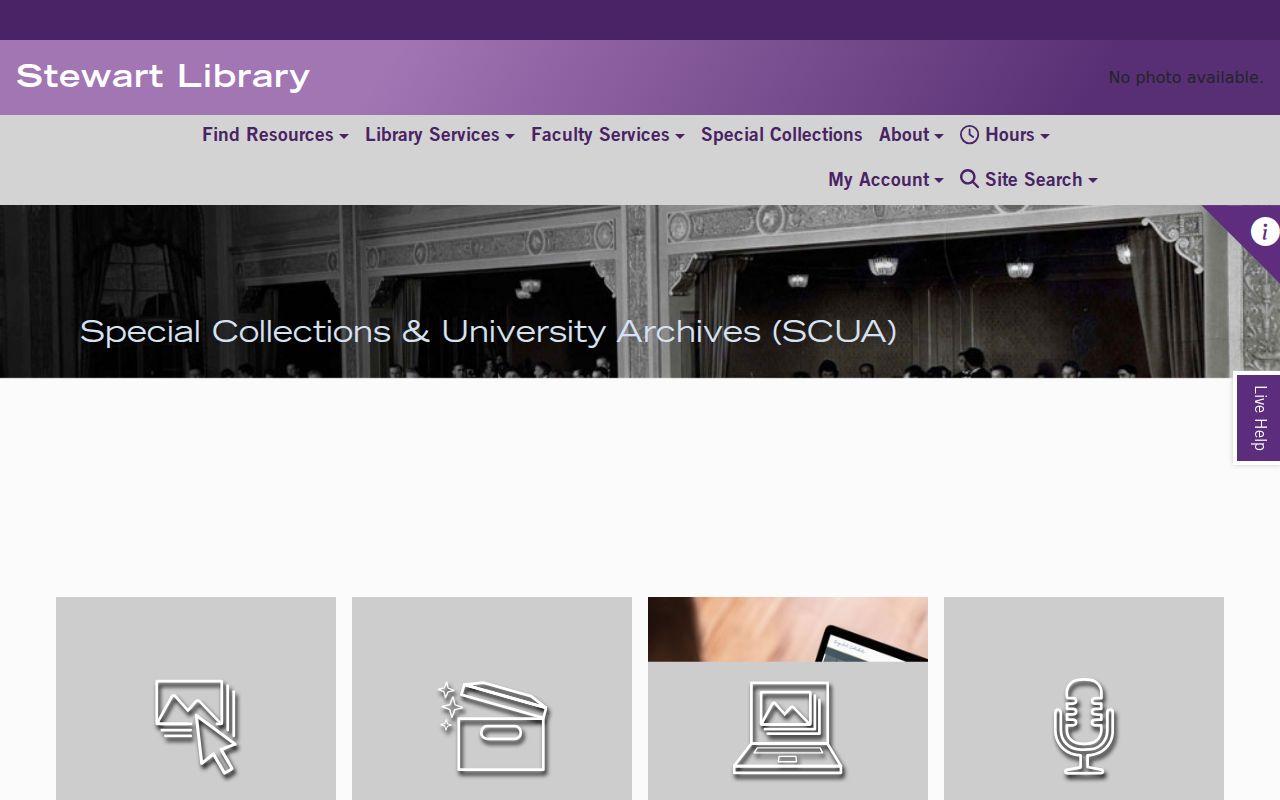
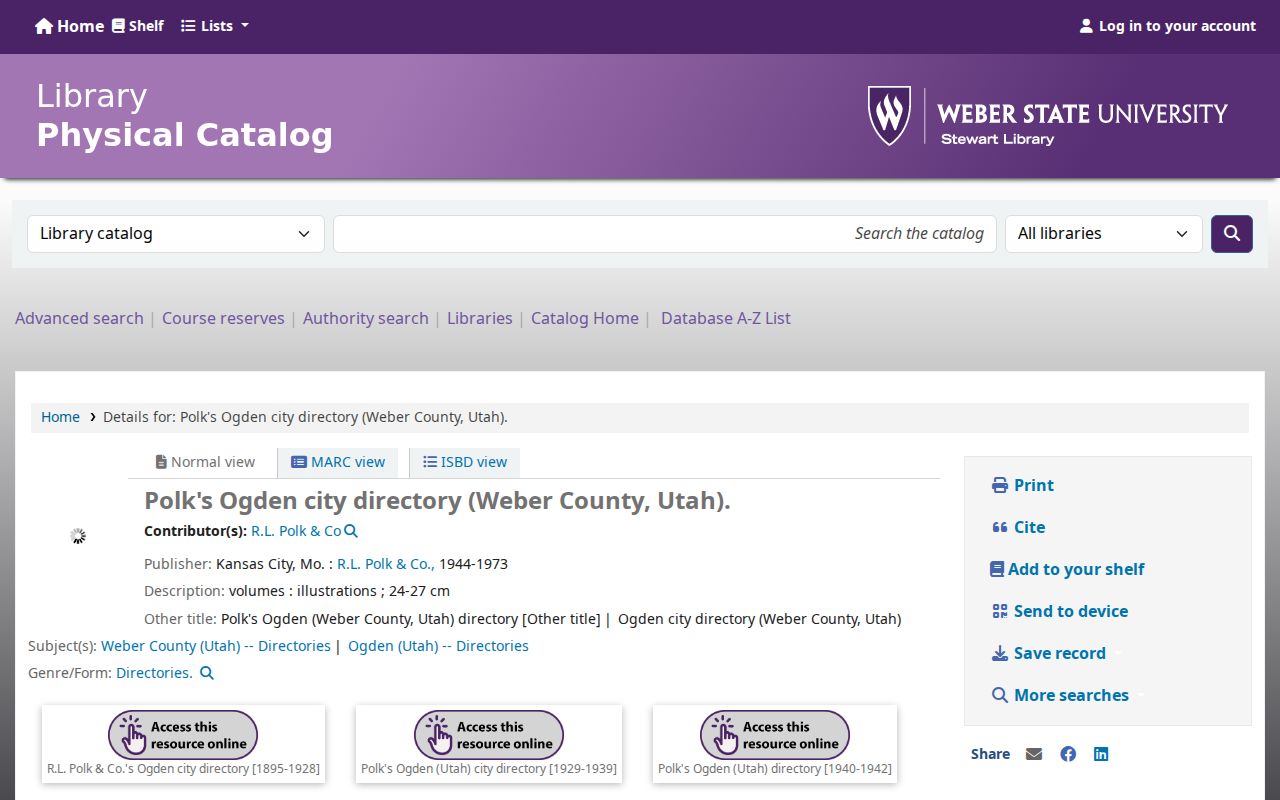
The catalog route complements the collections page by showing which Ogden city directory volumes are held locally and which request details staff need.
That service is different from a name search. Give staff a precise address, a narrow year range, and the question the entry should answer.
Browse the Ogden City Directory Polk Run
The Weber County Polk Directories digital collection is the fastest online route into many Ogden volumes. Its description says entries usually list citizens, often heads of household, with an address and occupation. It also notes that some pages carry wife names, deaths from the prior year, business partners, or forwarding addresses. Read the image and its surrounding pages, since OCR can misread older type.
The Stewart Library catalog record is the shelf map for years not exposed in the digital browse. The catalog links runs from 1895 through 1928, 1929 through 1939, and 1940 through 1942, then lists physical 1944–1973 volumes and later surrounding-city series. The collection is broader than a current city boundary. An entry may cover Ogden and adjacent suburbs.
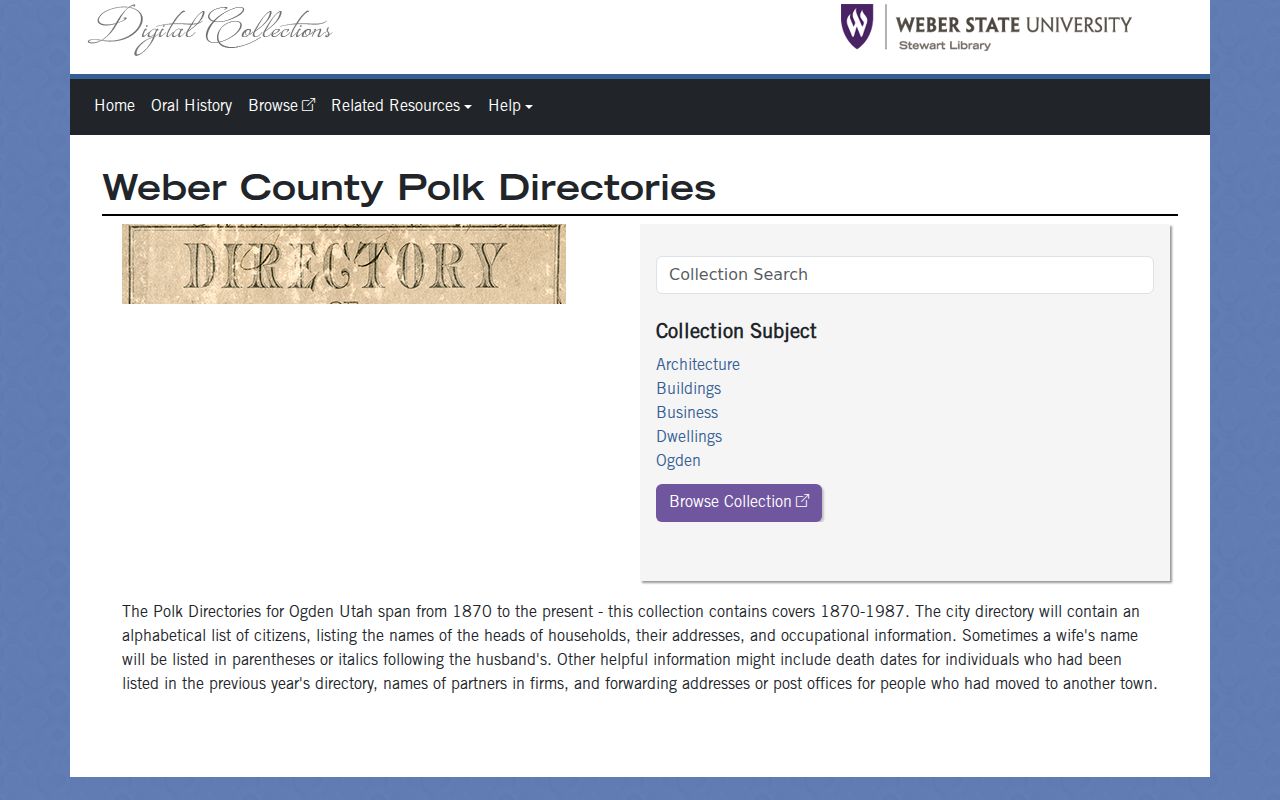
Credit the collection when quoting or sharing a page. Digital items may carry public-domain or rights-specific notices.
Why 1883 Streets Matter to an Ogden City Directory
Ogden’s printed street language predates modern ZIPs and stable house numbers. The 1883 sample can say “Third, bet. Franklin and Wall” or use “cor.” for a corner. Fred Kiesel-era street modernization in the 1890s brought renaming and numbering changes, and 25th Street was paved in 1893. A family-history search should preserve the old phrase before trying to match it to a current parcel.
Use the street guide in the directory, then compare cross streets with Ogden City GIS, Weber historic plats, and the property-address record. Occupation can help separate same-name people. Railroad, stockyard, canning, flour, newspaper, merchant, or defense-related work may place a person in the right historical setting, but it remains a directory clue, not proof of identity.
A current street search belongs with the address-focused directory, while the historical volume supplies the old name, year, and cross-street lead.
Ogden City Directory Newspapers and Archives
The Weber County Library newspaper collection reaches farther than a directory index. Its microfilm covers the Ogden Standard-Examiner and predecessor papers from 1870 to present. Digitized Ogden issues run from November 10, 1881 through December 31, 1977 for in-library use, and Utah Newsearch covers 2005 to present articles and obituaries. Utah Digital Newspapers lists 24 Weber County papers, with gaps in some Standard-Examiner years.
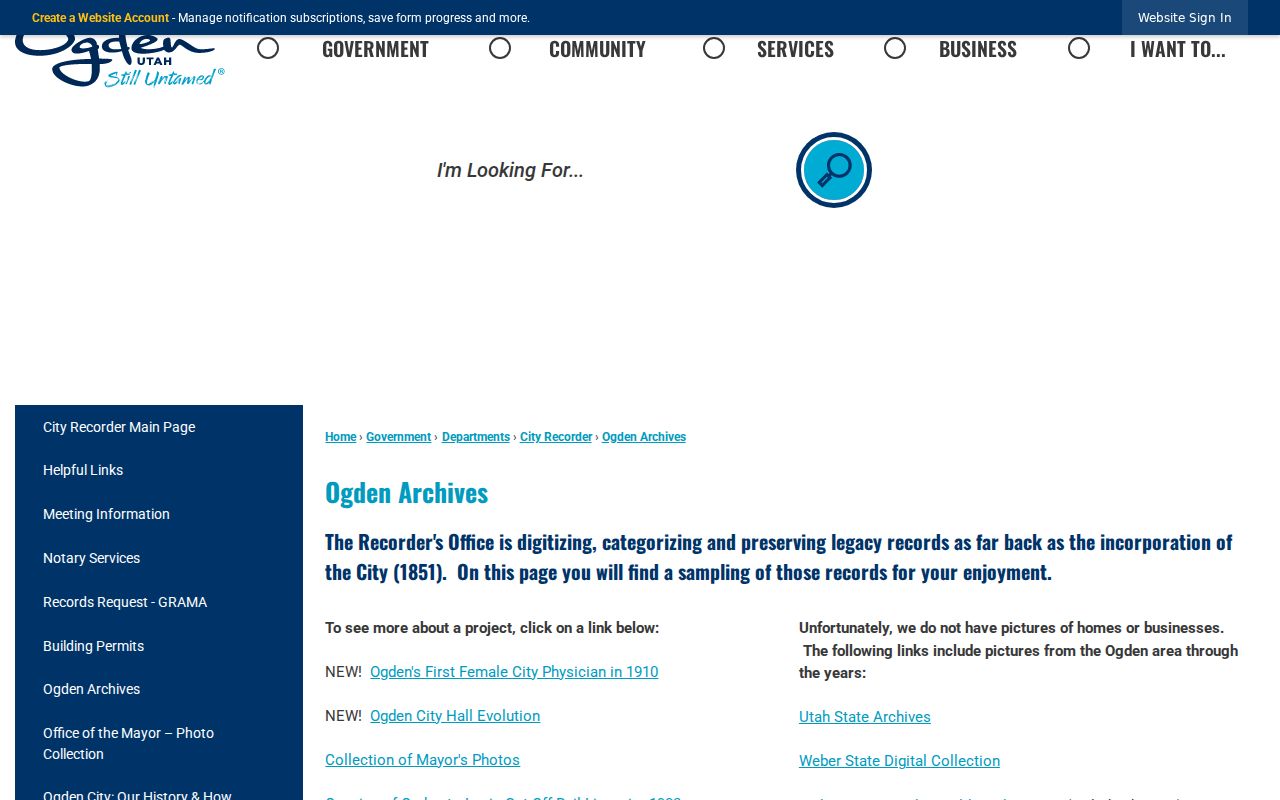
Ogden City Archives describes municipal digitization back to incorporation in 1851. Projects include the first female city physician in 1910, mayor photographs, City Hall history, the original townsite land patent, and WWII public-works records. These sources can add a civic, business, or family context to a directory entry without pretending that a current household roster exists.
For a death or move, search the obituary, then test the cemetery register, probate index, and next directory year.
Ogden City Directory Years and Census Releases
The census fills a different gap. Released schedules can show household relationships, age, birthplace, and nearby households, while the city directory supplies a more frequent address and occupation line. Pair the closest directory volume with 1900, 1910, 1920, 1930, 1940, or 1950 when the geography fits. The federal 72-year release rule means later schedules are not automatically available.
Utah State Archives lists the Weber 1850 federal census index, Ogden’s 1890–1905 birth register, Weber County birth registers from 1898–1905, and territorial probate and criminal series. The Archives name-index hub is a useful bridge when a printed directory stops. On August 4, 2026, the Archives announced refreshed index links for the Weber 1850 census. New links improve discovery, but they do not open restricted current records.
Compare boundary labels too. An old directory may describe the Ogden area, not the modern municipal line.
Use Ogden City Directories for Family History
For a household trail, keep one line of notes for each year. Write the exact name, address, occupation, spouse notation, and any mark that suggests a move or a forwarding address. Do not smooth a printed spelling into a modern one. The difference may be the clue that separates two people with the same name.
- Find the first plausible appearance and capture the page, name, occupation, address, and household note.
- Check the closest prior and next available volume for a move, new spouse, death note, or changed work.
- Use the street or criss-cross section to test nearby entries and address changes.
- Pair the directory with released census years: 1900, 1910, 1920, 1930, 1940, and 1950.
- Close the trail with a newspaper, cemetery, marriage, death, probate, or deed record.
Disappearing from a city directory can mean a move, death, an unlisted address, a publication gap, or an index error. A newspaper notice, Ogden Cemetery entry, probate file, or next address is what tells those stories apart.
Directory coverage is not uniform from one year to the next. A digital collection may expose a page image while a catalog record only confirms that a volume exists. A physical volume may be available for consultation but not loan, and a reproduction request may depend on the condition of the binding or the rights notice attached to the item. State the exact year, city, street, and surname when contacting staff so they can distinguish a missing scan from a missing volume.
Use the alphabetical section for a known household head, then check the street, business, church, school, and classified sections. Those companion sections can reveal a firm, organization, or address clue that explains a spelling variation. They still describe the publication’s scope, not every person who lived in Ogden. Keep the printed abbreviation, page number, and collection name in your notes so another researcher can audit the interpretation.
For family history, compare the closest available directory with a released census schedule and a newspaper or cemetery result. The census may show relationships that the directory omits, while the directory may provide a year-by-year address that the census cannot. A disagreement is a prompt to inspect dates, wards, nearby streets, and household roles, not a reason to silently choose the convenient entry.